Wednesday, June 5, 2013

I Could Lose My Best Friend

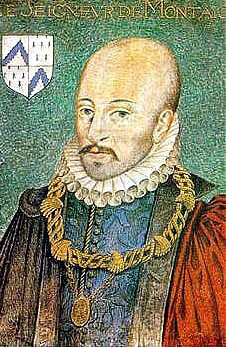
Michel de Montaigne (Wikipedia)
At age 39, Michel de Montaigne decided to retire from public life to his estate and spend time in his library among his 1,500 books writing in a new genre he called essays. Montaigne is loved by readers for his generally positive outlook and warm temperament. One tragedy, however, haunted him as he entered his study to begin writing: the death of his friend Étienne de La Boétie. 

Obviously the death of friend would hurt any of us, but for Montaigne it especially hurt because La Boétie was Montaigne's "genuine friend", which meant a very specific thing. Like many educated Europeans in Early Modern Europe Montaigne was influenced by the resurgence of popularity in Classical Greek and Roman writers whose thinking on friendship was profoundly influenced by Aristotle's

For Aristotle most of the people we consider friends because of shared interests, shared professions, shared religion, are "imperfect friends". Genuine friends, by comparison, are deeper than that. A genuine friend is someone who you befriend not because of what they do for you (give you someone to talk to about professional advancement or shared interests), but for what you can do for them. It's not enough to want to have someone's well being as the primary motivation, the genuine friend must also feel the same about you. "The ancient Menander," noted Montaigne, "declared that man happy who had been able to meet even the shadow of a friend."

According to Montaigne, he and La Boétie had that kind of friendship. "“If you press me to say why I loved him," observed Montaigne in his essay "On Friendship" about La Boétie, "I can say no more than because he was he, and I was I." La Boétie death four years later devastated Montaigne:

"[I]f I compare all the rest of my life- though by the grace of God I have spent it pleasantly, comfortably, and, except for the loss of such a friend, free from any grievous affliction, and full of tranquility of mind, having accepted my natural and original advantages without seeking other ones – if I compare it all, I say, with the four years which were granted me to enjoy the sweet company and society of that man, it is nothing but smoke, nothing but dark and dreary night. Since the day I lost him... I only drag on weary of life. And the pleasures that come my way of instead of consoling me, redouble my grief for his loss. We went halves in everything; it seems to me that I am robbing him of his share."
This is the risk of Aristotle's genuine friendship. The loss of an imperfect friendship may sting, but you don't lose the interests were really the purpose of the connection. When you lose a genuine friendship, however, you are no longer able to to engage in the central joy it brings: giving generously to that person. Furthermore, every bit of happiness you get in life reminds you that you've lost a person with whom you could share it and expect complete understanding and enjoyment.

In my copy of Montaigne's Essays there's a margin note from the first time I read "On Friendship": "This is one of the sweetest, kindest, most heartbreaking things I have ever read." The heartbreak necessary to write the essay is far worse than the practice Performance Test I'll be working on this afternoon.

Saturday, June 1, 2013

I Could Be Prepping For The Bar In A Place Without Views Like This

As I've stated previously California has the hardest bar exam in the United States. Still, if you have to suffer through the hardest legal exam in the US doing it at Mr. Toots Coffeehouse in Capitola, CA is not a bad way to go.

Thursday, May 30, 2013

I Could Have To Serenely Accept Unearned Disrespect

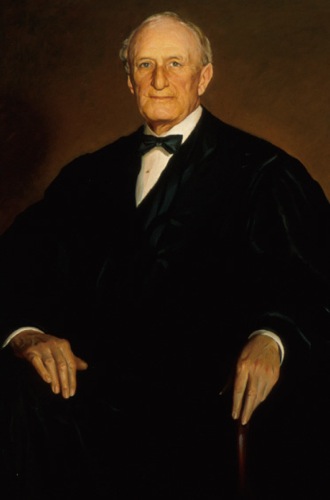
James McReynolds (Source: Wikipedia)
Supreme Court Justice James McReynolds is not remembered fondly. An anti-Semite and a racist who sat on the Court when both of these views were coming under assault on Constitutional grounds Justice McReynolds hasn't fare well in the judgment legal historians. Constitutional scholar Lucas A. Powe's assessment wins the the award for most pithy: "He could have been, but wasn't, a Klansman."

McReynolds refused to hire Jews and blacks as law clerks, but changing social mores forced him to risk interacting with them on a day to day basis. They appeared as colleagues (Justices Brandeis and Cardozo were both Jews) and counsel before the bench (Charles Houston, special counsel for the NAACP, was black). McReynolds handled these offenses to his sense of propriety by reducing the amount of time he was required to look at them.

He treated Louis Brandeis, the first Jewish Supreme Court Justice, poorly. During Justice Brandeis' first three years on the bench McReynolds didn't speak with him once and refused to sit near him on occasions when the Justices appeared in public. We don't have a 1924 group portrait of the  Supreme Court because seniority dictated that McReynolds sit next Brandeis in the photograph. McReynolds refused to participate forcing Chief Justice Taft to cancel the photo session. Mere spatial distance was not enough: even when he agreed with Brandeis' opinion McReynolds refused to sign on to them.

His treated Benjamin Cardozo worse. According to the memoir of one of McReynolds' former clerks, who was fond of Cardozo, McReynolds never spoke to Cardozo. Apparently because Cardozo once had the temerity to suggest a few additions to an opinion McReynolds circulated for comment. No doubt McReynolds was also stung that the White House ignored his plea (signed by two other Justices!) that the White House "not afflict the court with another Jew." Rather than watch another member of the tribe of Abraham get sworn in, McReynolds read a paper during Cardozo's swearing in ceremony. McReynolds continued this practice as long as they both sat on the Supreme Court, covering his face with court documents whenever Cardozo read an opinion from the bench.

As a Justice required to uphold and embody the ideal of equality before the law his treatment of NAACP special counsel Charles Houston was inexcusable. Chief architect of the NAACP's multi-year strategy for overturning Plessy v. Furgeson, Houston presented his first argument to the United States Supreme Court in the case Missouri ex rel. Gaines v. Canada. The case involved a black man seeking to be admitted to the only law school in the state of Missouri, which also had a white's only admission policy. As Houston approached the bench McReynolds, true to his philosophy of out of sight, out of mind, turned his chair around and kept his back turned during Houston's oral argument. When Houston finished arguing McReynolds turned his chair back around. Houston won the case and McReynold's wrote a dissent warning that allowing blacks into Missouri's only law school would "damnify both races."

Brandeis, Cardozo, and Houston all put up with McReynolds' slights because they were new members at the table of power. The fact that two other justices objected to the nomination of Cardozo, one of the greatest legal minds of the 20th century, reveals that their experiences with McReynolds were probably a small sampling of the slights and mistreatment the three men received as minorities entering the WASPiest of professions. No matter how bad things may go at the Bar, it won't be as bad as going up to argue before the Supreme Court and having a Justice turn his back on me.


Monday, May 27, 2013

I Could Be A Prisoner Of War

James Stockdale (Source: Wikipedia)
As he drifted in a parachute down into enemy territory Commander James Stockdale realized that the best he could hope for was solitary confinement and torture. Contemplating his almost certain imprisonment in a North Vietnamese POW camp he muttered to himself "Five years down there at least, I'm leaving the world of technology and entering the world of Epictetus." He was half right. He was entering a world as brutal as the world of the Roman slave-turned-philosopher Epictetus, but he underestimated the length of imprisonment: it would last almost seven years.

Epictetus is one of those philosophers loved by people who think they hate philosophy. Former slave of an assistant to the despotic Emperor Nero, Epictetus eventually gained his freedom and became a renowned teacher of Stoic philosophy. His short, pungent, observations about the struggles we humans face still appeal to those with an appreciation for gallows humor (Example: "If you want to be crucified, just wait, the cross will come."). Aside from being a great source of dark comedy, however, Epictetus also had a knack for explaining how Stoic ethical theory applied to everyday life.

The central idea Stockdale gleaned from Epictetus was the Stoic idea of "dichotomy of control." In Stockdale's rendering of the idea practicing Stoics kept two "separate files" in their heads. In the first file they put "things in my control" in the second file they put "things outside of my control." According to the Stoic "dichotomy of control" only the things under a person's control are worth worrying about, whereas the the things outside of a person's control are not.

This all sounds great in theory, but Stockdale's story reveals how tough it can be in practice. Throughout his imprisonment he had one goal: don't provide or be propaganda for the Viet Cong. Being put in solitary confinement for years? Outside Stockdale's control, don't worry about it. Cutting his face so that he wouldn't make an attractive media image for the Viet Cong? Inside Stockdale's control, he should do it. Having his leg broken on multiple occasions? Outside Stockdale's control, grit through the pain and don't give information. Trying to break a window without detection so he could kill himself before giving up information about secret US military operations? Inside Stockdale's control, he should do it. 

It seems to me that if Stockdale can apply these principles in such awful conditions, then applying them in the context of Bar prep is far easier. I have one goal: to pass the bar. Showing up to class and watching the lectures while taking notes? In my control, I should worry about it. Reading the mind of the Bar question writers perfectly? Outside of my control, I shouldn't worry about it. Learning from each mistake I make on practice exams so I don't make it again? In my control, I should worry about it. Getting the perfect bar grader who is generous in handing out points? Outside my control, I shouldn't worry about about it.

This is certainly a more attainable goal than surviving seven years of torture without breaking.

Wednesday, May 22, 2013

"It Could Be Worse" When It Seems As Bad As It Can Get

I am by nature a person who tries to see the sunny side of things. Though sometimes a process can be so thoroughly unpleasant that I can only get through it by constantly reminding myself that it could be worse. Taking the bar in California, however, makes applying even my compromise rule more difficult.

The reason for the difficulty is this: no matter who does the measuring California has by universal consensus the hardest bar exam in the United States. So while other law graduates can say, "It could be worse, at least I'm not taking the bar in California." bar takers in California cannot positively contrast their bar experience with any other American taking the bar exam. Our experience is, empirically, as bad as it gets.

Despite what we aspiring California esquires may come to think over the next few months, however, there is a world outside of the context of the bar exam. While we may be having the worst possible bar experience, we are not having the worst possible human experience. It could be much, much, worse.

This blog will be a series of posts in which I remind myself that there are people who have gone through things that make my bar experience a joke and have still held their heads high. I also hope it will give my comrades in the struggle against the bar exam in California and in other states some perspective, a bit of gallows humor, and something else to think about other than memorizing the three (four?) elements of respondeat superior.