 |
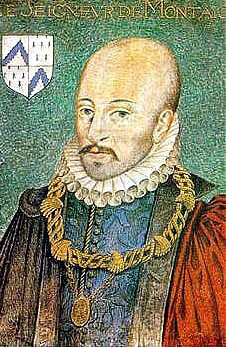
| Michel de Montaigne (Wikipedia) |
Obviously the death of friend would hurt any of us, but for Montaigne it especially hurt because La Boétie was Montaigne's "genuine friend", which meant a very specific thing. Like many educated Europeans in Early Modern Europe Montaigne was influenced by the resurgence of popularity in Classical Greek and Roman writers whose thinking on friendship was profoundly influenced by Aristotle's.
For Aristotle most of the people we consider friends because of shared interests, shared professions, shared religion, are "imperfect friends". Genuine friends, by comparison, are deeper than that. A genuine friend is someone who you befriend not because of what they do for you (give you someone to talk to about professional advancement or shared interests), but for what you can do for them. It's not enough to want to have someone's well being as the primary motivation, the genuine friend must also feel the same about you. "The ancient Menander," noted Montaigne, "declared that man happy who had been able to meet even the shadow of a friend."
According to Montaigne, he and La Boétie had that kind of friendship. "“If you press me to say why I loved him," observed Montaigne in his essay "On Friendship" about La Boétie, "I can say no more than because he was he, and I was I." La Boétie death four years later devastated Montaigne:
"[I]f I compare all the rest of my life- though by the grace of God I have spent it pleasantly, comfortably, and, except for the loss of such a friend, free from any grievous affliction, and full of tranquility of mind, having accepted my natural and original advantages without seeking other ones – if I compare it all, I say, with the four years which were granted me to enjoy the sweet company and society of that man, it is nothing but smoke, nothing but dark and dreary night. Since the day I lost him... I only drag on weary of life. And the pleasures that come my way of instead of consoling me, redouble my grief for his loss. We went halves in everything; it seems to me that I am robbing him of his share."
This is the risk of Aristotle's genuine friendship. The loss of an imperfect friendship may sting, but you don't lose the interests were really the purpose of the connection. When you lose a genuine friendship, however, you are no longer able to to engage in the central joy it brings: giving generously to that person. Furthermore, every bit of happiness you get in life reminds you that you've lost a person with whom you could share it and expect complete understanding and enjoyment.
In my copy of Montaigne's Essays there's a margin note from the first time I read "On Friendship": "This is one of the sweetest, kindest, most heartbreaking things I have ever read." The heartbreak necessary to write the essay is far worse than the practice Performance Test I'll be working on this afternoon.


No comments:
Post a Comment